

We use cookies to give you a better browsing experience. Know how we use your data.

AI Products

Build an AI product around a real user need

Take an AI idea through product definition, design, development, and rollout with the engineering needed to support everyday use.

AI Product Engineering

Design, develop, and scale AI-native products and AI-powered digital experiences.

Define and build the first version of an AI product around a clear user journey and a small set of measurable outcomes.

AI MVP Development

Test a technical assumption or user interaction before committing to a broader product build.

AI Proof of Concept

Engineer AI capabilities within a SaaS product, including application workflows, account boundaries, and operational visibility.

AI SaaS Development

Bring AI features into mobile experiences with attention to device interactions, latency, and the user’s immediate context.

AI-Powered Mobile Apps

Create web interfaces and backend workflows that make model-powered capabilities accessible within an everyday task.

AI-Powered Web Applications

Develop application logic, data flows, integrations, and AI behavior around a specific business requirement.

Custom AI Software Development

Introduce AI into an existing product through scoped changes that fit its architecture and established user journeys.

Product Modernization with AI

Take an AI idea through the whole product journey

Validate a new product idea

An early AI idea often combines questions about the user experience with uncertainty about what the technology can deliver. We identify the assumption that matters most and build a focused way to test it. Findings from that work shape the first release, the data requirements, and the product decisions that need further exploration.
Build an AI feature into an existing product

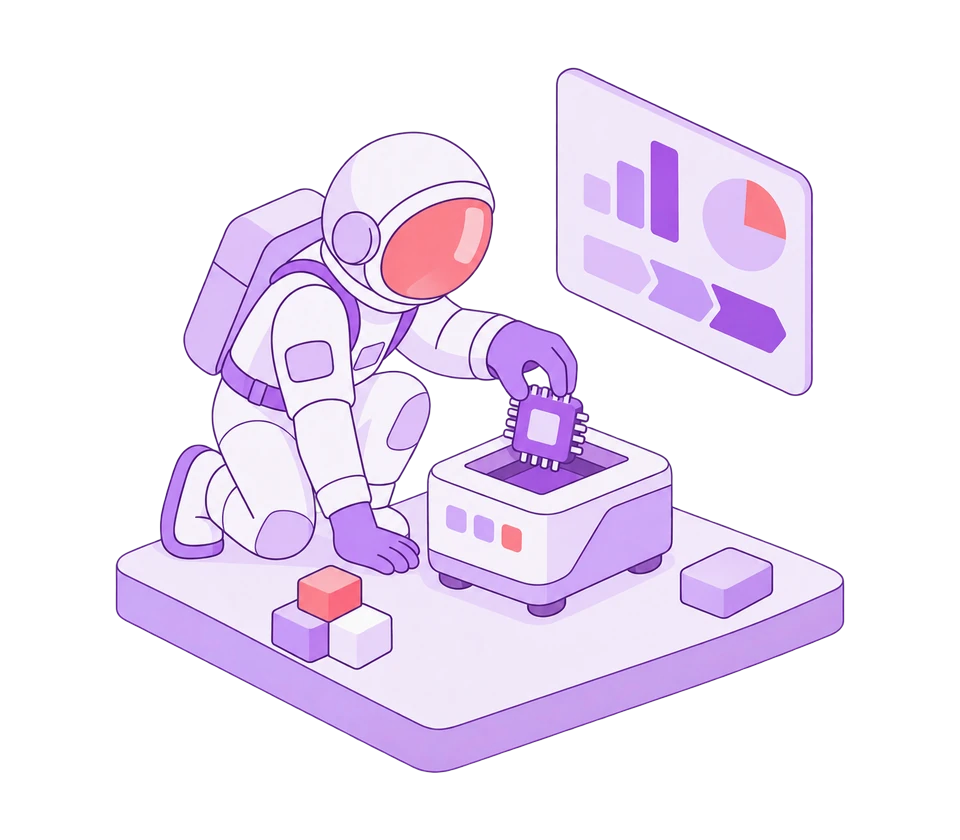
A useful AI feature needs to fit the surrounding journey, account model, and application architecture. We assess where the capability belongs and what context it needs, then design the interface and backend workflow together. The release is evaluated on whether the complete experience helps the user accomplish the intended task.

Move from prototype to a working product

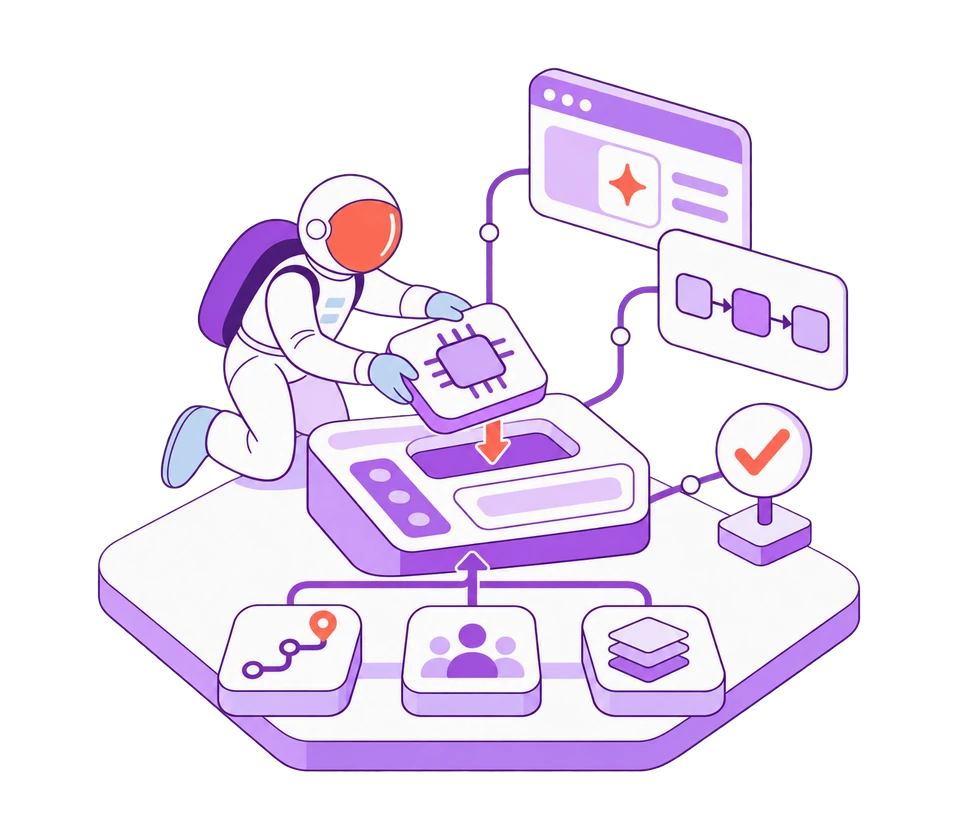
A prototype demonstrates an interaction, while daily use brings requirements around reliability, permissions, support, and change management. We work through those requirements alongside the product design and AI behavior. The resulting delivery plan connects the user-facing experience with the engineering and operating foundations needed for the agreed launch scope.

Engineer the complete product experience

Product and interaction design

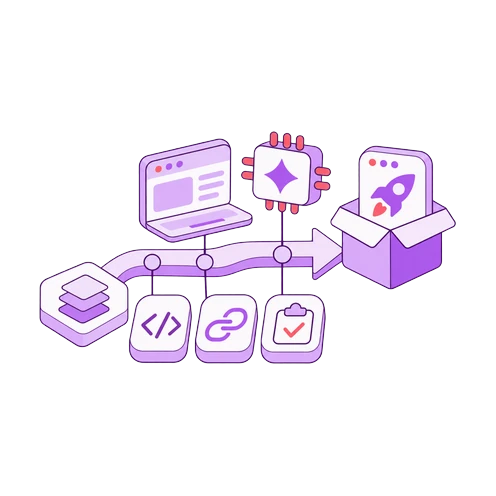
User research, prototypes, and interface decisions establish where AI supports the journey and how users understand and act on its outputs.

Application foundations

The backend coordinates accounts, permissions, data, model interactions, and connected services around the product’s supported workflows.

Release and operating feedback

Evaluation, user feedback, and application monitoring provide a shared view of the quality and reliability of the complete experience.

What you take forward

  • A product definition covering the audience, core journey, release scope, and the assumptions that need validation.
  • Design and engineering implementation for the agreed interface, backend, integrations, and AI-powered workflow.
  • A release evaluation covering user tasks, application behavior, model outputs, and the failure cases relevant to launch.
  • A product and technical handover describing deployment, operating responsibilities, and the priorities for subsequent iterations.

Our approach

From your first question to everyday use

Design, develop, and scale AI-native products and AI-powered digital experiences.

Define the product

Work through the audience, problem, core journey, and evidence needed for the first release.

Discovery works through the user need, the business model where relevant, and the evidence needed for the first investment decision. The scope includes the complete journey that the release must support.

Prototype the experience

Test the interaction and the AI behavior before building out the complete workflow.

Prototyping brings the interaction and AI behavior together early. We review what users understand, where they need control, and which technical assumptions require a focused experiment.

Engineer the release

Connect interface, backend, data, model behavior, and application integrations.

Engineering connects the product’s interface and services with appropriate AI capabilities. Testing covers the full path through the application, including permissions, incomplete inputs, and unavailable dependencies.

Launch and iterate

Review user feedback, model quality, reliability, and operating costs as the product grows.

The release is reviewed through user outcomes and operating evidence. Subsequent work can improve the experience, extend supported tasks, or strengthen the foundations for a larger audience.

Turn your AI idea into a product people can use

Engagement models that fit your next step

Product discovery and PoC

Explore the user need and test the technical assumption that could change the product’s direction. The engagement produces findings and a proposed path toward the first usable release.

MVP and product delivery

Design and build a scoped product journey with the application and AI capabilities it needs. Delivery covers the interface, engineering, integrations, evaluation, and handover for the agreed launch.

Embedded product team

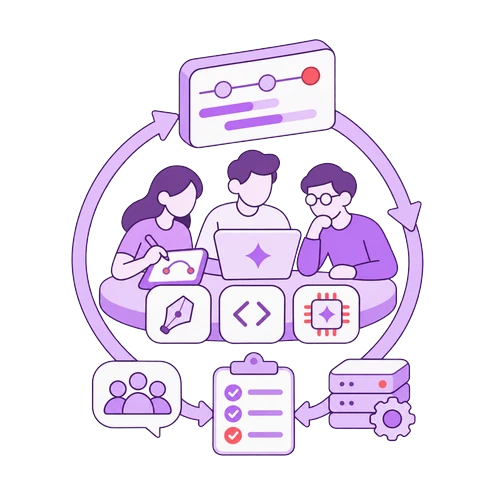
Work with a team across a continuing product roadmap. Design, engineering, and AI evaluation progress together, with priorities reviewed against user feedback and the operational experience of the deployed product.

An agile sprint method

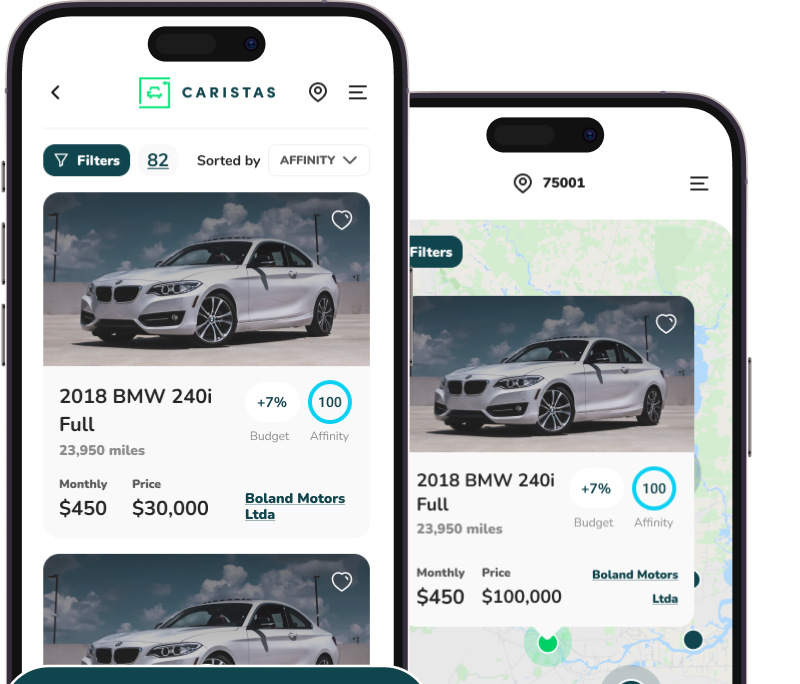
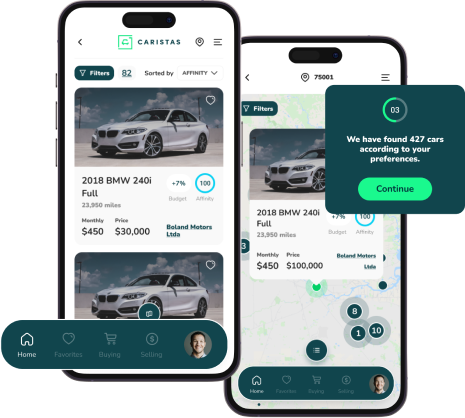
They suggested an agile sprint method, and provided innovative and user friendly solutions.

Tim Reiff, co-founder of Caristas
Tim Reiff - Co-Founder
Caristas

Got questions?

We've got answers.

Yes. A proof of concept can answer a specific feasibility question and establish what needs to be learned before defining the product release.

The scope should cover a complete user journey and the controls needed to operate it. Product and model behavior are evaluated together against the intended outcome.

We can assess the product architecture, data access, and user journey to identify a suitable integration point and a staged delivery approach.

We evaluate the user journey and the AI behavior together. Prototype findings inform engineering, while technical constraints inform the interaction and the scope of the first release.

The next stage is guided by user feedback, quality evaluation, and operating evidence. The roadmap can include new capabilities, usability improvements, integrations, and maintenance of the deployed application.

Rocket

Ready to turn
your vision into
reality?

The journey starts here. We're excited
to meet you.