


We use cookies to give you a better browsing experience. Know how we use your data.

Generative AI

Turn your knowledge into useful AI experiences

Build applications that combine foundation models, your organization’s knowledge, and workflows designed around how people work.

Generative AI & LLM Solutions

Build enterprise applications using foundation models, proprietary knowledge, and custom AI workflows.

Build model-powered experiences for drafting, summarizing, transforming, and exploring information within a defined product workflow.

Generative AI Development

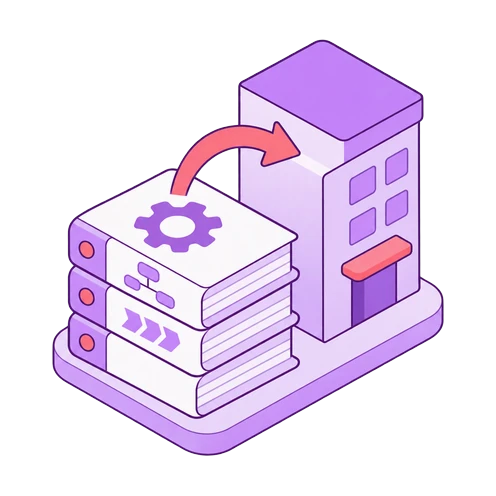
Connect language models to application logic, business tools, and user interfaces that support a specific task.

LLM Application Development

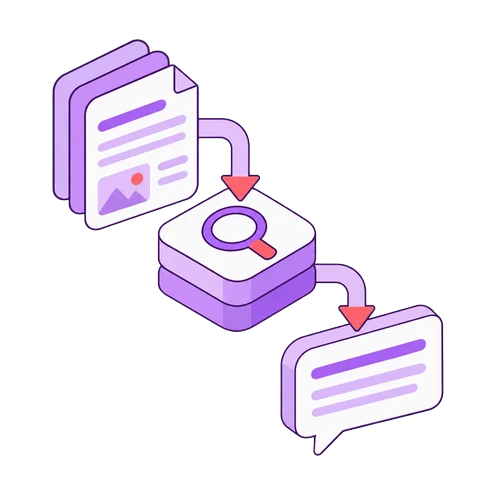
Create retrieval pipelines that find relevant source material and supply it as context for model responses.

RAG Development

Help employees find and understand internal information through assistants connected to approved knowledge sources.

Enterprise Knowledge Assistants

Assess whether model adaptation is appropriate, prepare training examples, and evaluate the resulting behavior against a baseline.

LLM Fine-Tuning

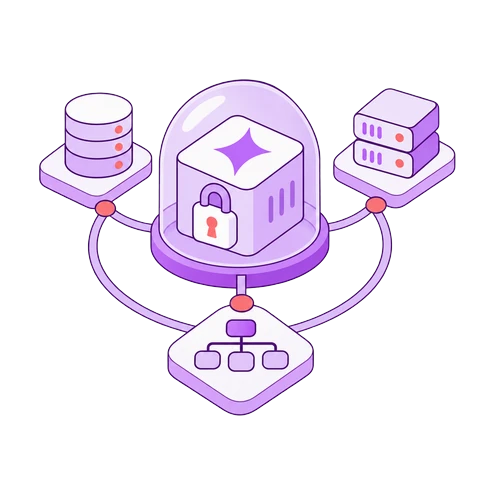
Scope deployment and access around your organization’s data requirements, infrastructure constraints, and operating model.

Private AI Solutions

Design instructions, retrieved context, examples, and tool information so the application has the inputs it needs at each step.

Prompt & Context Engineering

Make knowledge useful inside the work people do

Find answers across internal knowledge

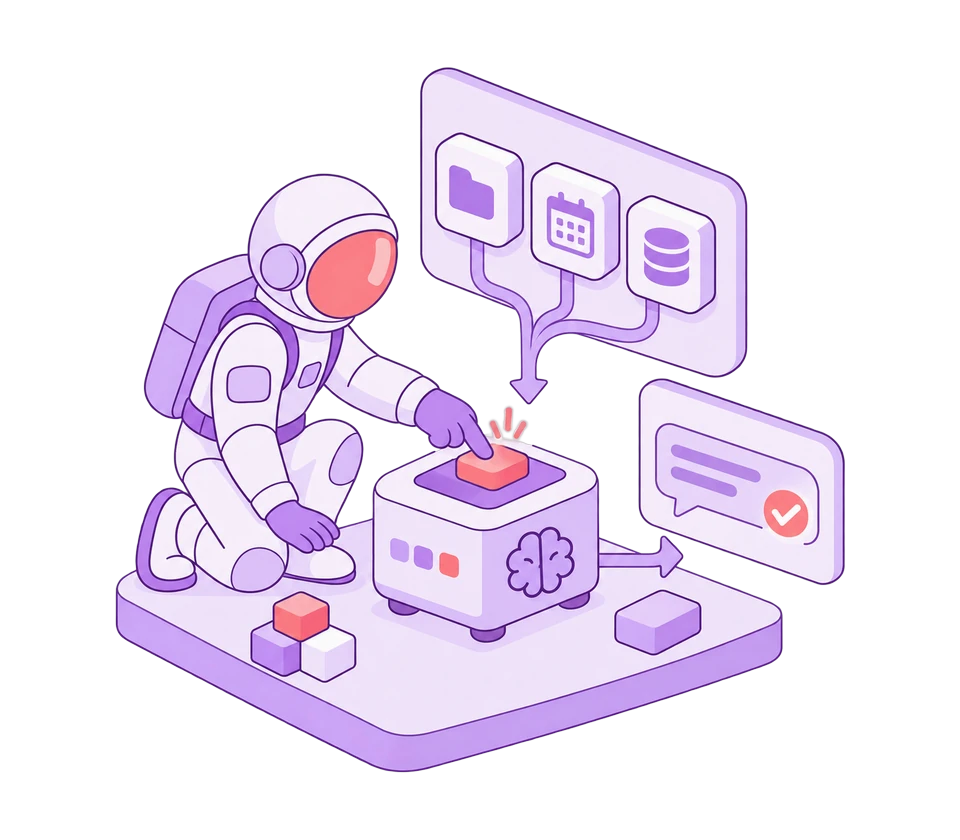
Policies, documentation, and operational guidance often live in several places. A knowledge assistant can retrieve relevant material and help users understand it within a question or task. We design source access, retrieval behavior, and response evaluation together so the application reflects the information each user is permitted to use.
Prepare content with business context

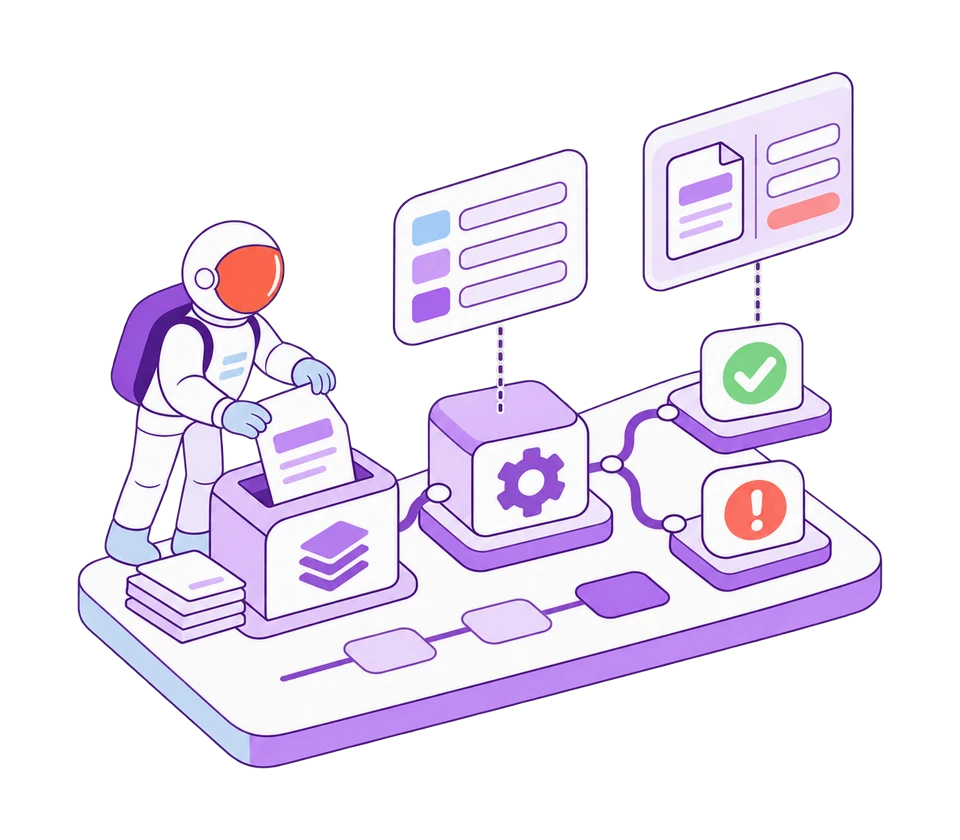
Teams may need a first draft of a response, summary, report, or product description. A generative workflow can bring the relevant facts and instructions into that task. Review points, output structure, and examples of acceptable work help establish how generated material should be checked before it moves into the next business step.

Add language capabilities to a product

A language model can support search, explanation, drafting, or transformation within an existing product journey. The application needs to supply the right context and make the result useful to the user. We work across interface design, retrieval, application logic, and evaluation to create a complete feature around that interaction.

Build the experience around reliable context

Knowledge preparation

Source selection, document structure, update frequency, and permissions shape how information should be prepared and retrieved for the application.

Application and model logic

The workflow coordinates instructions, context, tools, and output handling so model capabilities fit a defined user task.

Quality feedback

Evaluation examples and user feedback reveal where retrieval, source content, instructions, or the interface need to improve together.

What you take forward

  • A defined user journey with source requirements, response expectations, and examples of successful and unsuccessful outputs.
  • An application implementation connecting model behavior, context preparation, retrieval where needed, and the relevant business workflow.
  • A versioned evaluation set for checking response quality as instructions, source content, or model choices change.
  • An operating handover covering knowledge updates, access boundaries, monitoring, and the review of proposed improvements.

Our approach

From your first question to everyday use

Build enterprise applications using foundation models, proprietary knowledge, and custom AI workflows.

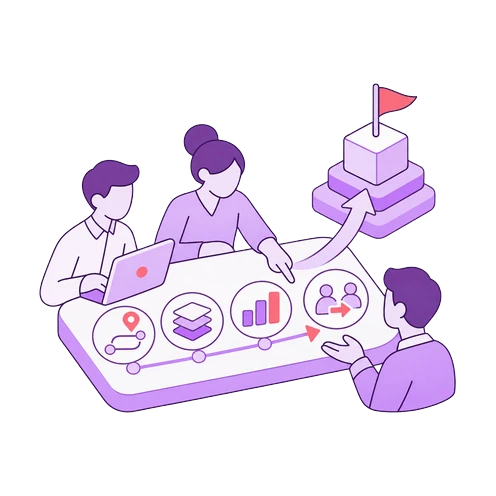
Define the experience

Choose the user task, source information, response requirements, and measures of quality.

We identify the moment where generated or retrieved information helps the user progress. The product definition covers the surrounding interaction, the response format, and what the user needs to verify.

Prepare knowledge and context

Review source material, access rules, retrieval needs, and the way information changes over time.

Source assessment looks at coverage, freshness, ownership, and access. These findings guide retrieval and update processes, including how the application should behave when useful information is missing.

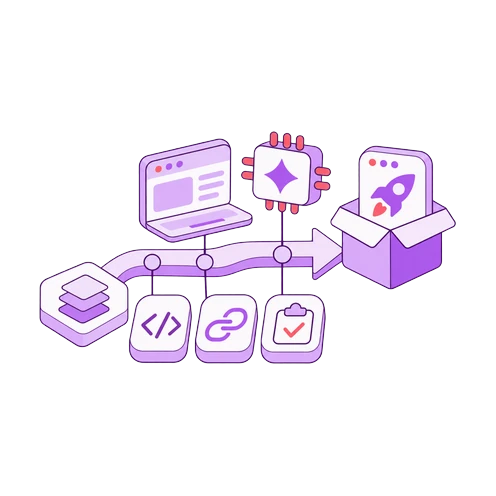
Build and evaluate

Develop the application and assess outputs against representative examples and failure cases.

The team compares outputs against examples drawn from the intended workflow. Evaluation results guide changes across context preparation, prompts, retrieval, and application behavior.

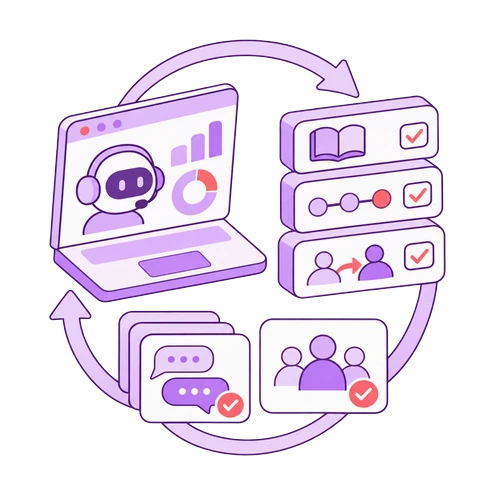
Deploy and refine

Monitor response quality, feedback, latency, and cost as the application is introduced to users.

After release, changes are assessed against the same user tasks and quality measures. Knowledge updates and model changes become part of a repeatable improvement process.

Explore what your knowledge could help people do

Engagement models that fit your next step

Knowledge and experience prototype

Explore one language-based use case with a defined set of sources and users. The prototype helps establish the value of the interaction and the work needed for a reliable application.

LLM application delivery

Build a complete product feature or enterprise workflow around model capabilities. The scope connects interface, source access, retrieval, evaluation, and operational requirements to the agreed user journey.

Quality and context optimization

Improve an existing application by reviewing source content, retrieval results, instructions, and user feedback. Proposed changes are evaluated against representative tasks before they are introduced to the deployed experience.

Solutions we would not have thought of

Simublade took our problems and converted them into solutions that we wouldn’t have thought of.

Senior Manager - Parrotforce
Parrotforce

Got questions?

We've got answers.

Retrieval is useful when responses need information from changing or organization-specific sources. Source quality, permissions, and retrieval performance all affect the result.

That decision depends on the task and evaluation results. We first assess what instructions, context, retrieval, and application logic can achieve.

The architecture can be scoped around approved sources, access permissions, and deployment requirements. These requirements should be established before model and infrastructure choices are finalized.

The design should identify source owners and an update process. Depending on the source, updates may be scheduled, event-driven, or reviewed before they become available to users.

The interaction can expose source material, identify missing information, and provide a route for correction or escalation. The approach should reflect the task and the consequence of an incorrect answer.

Rocket

Ready to turn
your vision into
reality?

The journey starts here. We're excited
to meet you.